Nexus Group: making each delivery route work harder.
As the callback-card business grew, Amit needed help delivering cards, supporting customers and developing the technology. In 1999, he decided to hire delivery people. The retail outlets were spread across different locations, so delivering a single product made it difficult to support the level of pay he wanted to offer.
His response was to add products those businesses could use regularly. Through a business called Nexus Group, he sold garbage bags, Pink Pearl hand soap and bathroom paper. Adding these everyday supplies alongside the cards created more sales opportunities on the delivery routes and helped offset delivery costs.
The idea came from a practical operating need: build a broader product offering so the delivery work could support reasonable compensation. It brought together route economics, retail relationships and repeat-use products.
From supporting card customers to call-center work.
Customer support was another requirement of the growing telecom service. Amit outsourced support to call centers in India, choosing a cost-effective model that could handle the service’s support needs. He managed this activity under Certex Solutions.
According to Amit, Rogers Communications later approached him, leading to call-center work for Rogers. He recalls that work as a strong commercial success. A capability originally developed to support his own customers had become a business serving another organization.
Building the technology—and opportunities for the people behind it.
Amit worked with students at York University to help develop the telecom technology and place physical switches in Bell facilities across the markets served. This involved both technology development and the practical work of establishing the service in different markets.
Certex Solutions later expanded into recruitment. Amit placed people in summer jobs, earning placement income while helping them gain work experience. He also helped them secure jobs after graduation.
Those relationships continued as their careers developed. Amit reports that some progressed to director-level roles and others built successful startups. People from that network still hire through him today.
What began as a way to find help for a growing service developed into a long-term talent network: students became professionals, then leaders and founders with hiring needs of their own.
Meeting demand during the Y2K period.
Amit also reports placing many people during the Y2K period. That recruitment activity became a significant source of revenue and a major commercial success in his account of the business.
The experience added another dimension to Certex Solutions: responding to a period of concentrated hiring demand while connecting people with work opportunities. Placement counts, financial figures and supporting artifacts have not yet been added to this account.
A storage problem became a client backup service.
As customer numbers and invoicing grew, storing the business’s files became an operating challenge. Amit acquired a CD recorder to store records on disc, creating a practical way to manage the growing volume of files.
He then began offering a backup service to clients. The service met a need he had encountered in his own business and created another way to build client relationships and introduce his other services.
In Amit’s account, this was another example of an internal requirement becoming a commercial offering: solve a problem for the business, find others facing a similar need, and build a relationship from there.
This backup service is part of the business archive.
The connected model was there from the beginning.
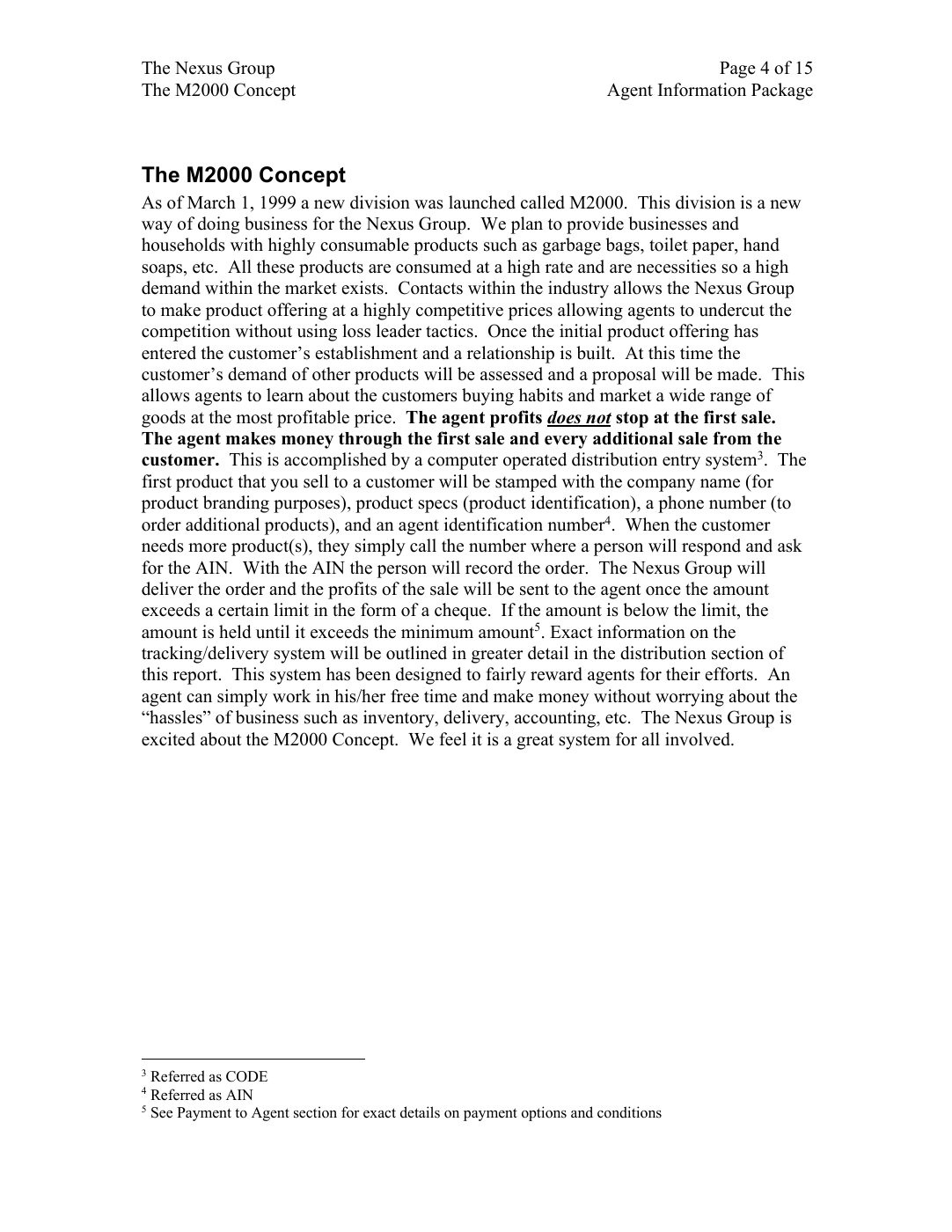
The M2000 agent information package
The surviving agent-book extract comprises 12 PDF pages, numbered 4–15 in the original package. It states that the M2000 division launched on March 1, 1999. Another section refers to a 1998 GBI pilot, providing context for work preceding the M2000 launch.
The package describes a model built around high-use products, direct manufacturer purchasing, volume pricing, delivery and repeat customer relationships. An agent identification number linked customers and subsequent orders to the originating agent. The described computer system tracked purchases, billing terms, delivery requirements and estimated usage, with follow-up when an expected reorder did not arrive.
The callback connection is explicit: one agent fee option included free callback service, subject to the historical terms. The book also described software, training, delivery and promotional support for agents. These were the arrangements described at the time, not present-day prices, benefits or earnings promises.
A wider range of products and services
The agent book listed the following future product and service opportunities:
- Garbage bags, toilet paper, hand soap, paper towels and window cleaners
- Office cleaning, vending machines, meeting catering and office party planning
- Calendars, advertising and internet marketing
- Computer upgrades and networking solutions
- Gift baskets and chocolates
Amit recalls that businesses emerging from this wider network were later sold or continue operating today. The package records what was being offered or contemplated at the time; the launch, ownership and outcome of each individual venture will be added as its history is documented.
Rogers cheque copies · May–June 2002
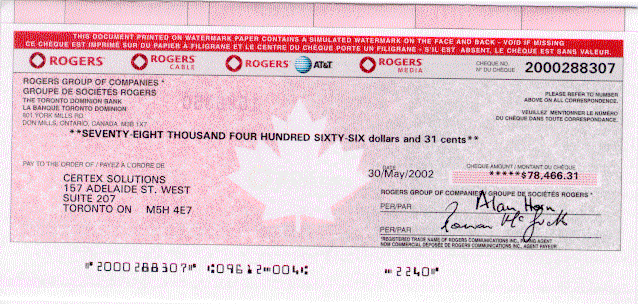
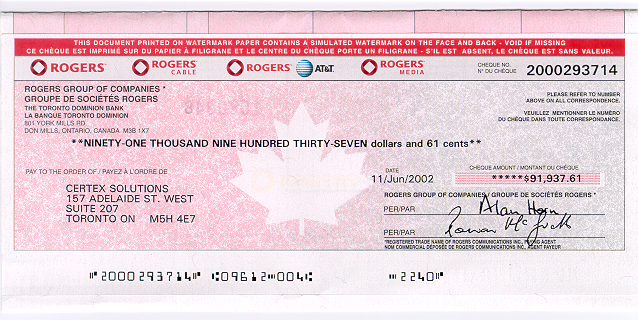
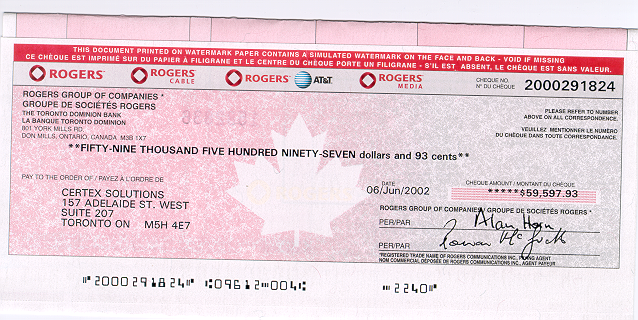

Four supplied historical cheque copies name Rogers Group of Companies as issuer and Certex Solutions as payee, with dates in May and June 2002. They add documentary context to Amit’s account of the Rogers work.
Complete historical scans, published with the owner’s authorization. These copies document the named issuer and payee; they do not by themselves establish service scope, cleared payments, total contract value or profit.
Certex Solutions · “3 Dimensional Thinking”
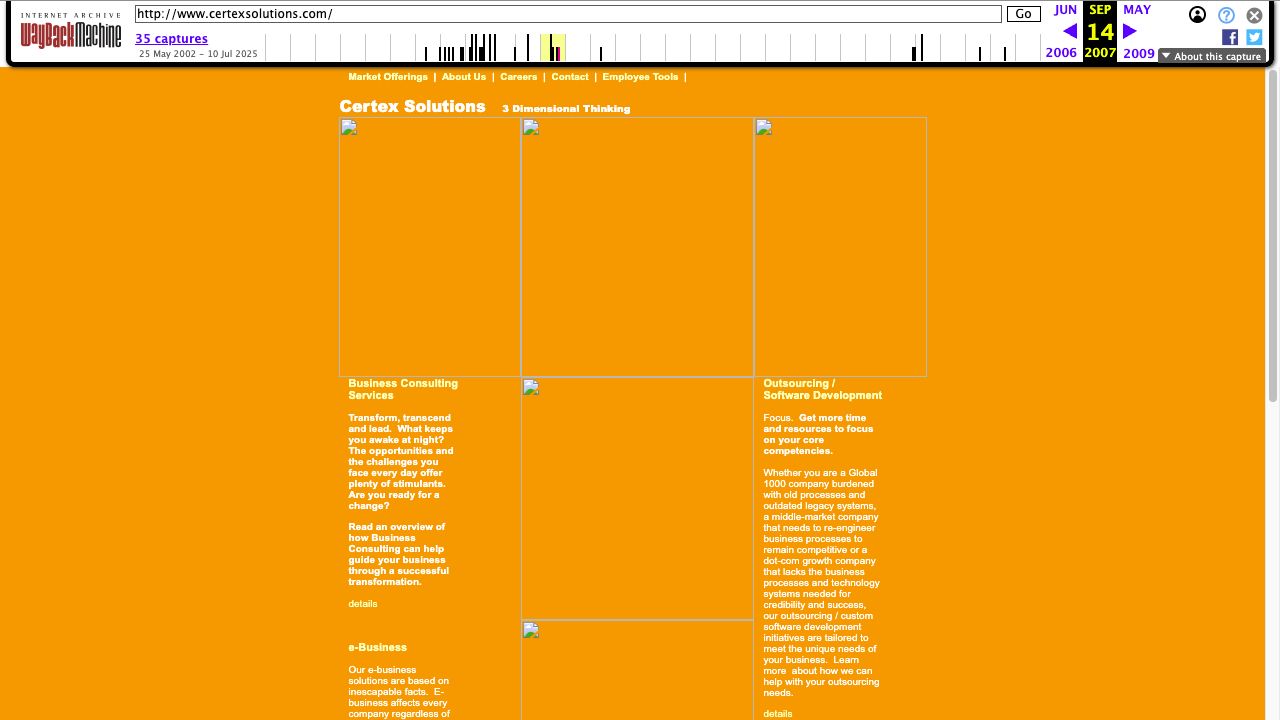
The archived Certex website displays the tagline “3 Dimensional Thinking”. Its homepage presents business consulting, e-business, human capital and recruitment, outsourcing and software development, marketing and sales development, and risk management.
That earlier language offers a striking connection to the broader perspective represented by 37 Dimensions today. It shows that bringing multiple business disciplines together was part of Certex’s positioning long before the 37 Dimensions name.
Explore the Certex website in the Wayback Machine →
The linked September 2007 archive replays nested Certex content captured in August 2007. Archived positioning describes the historical business and does not establish present-day availability or third-party endorsements.
Solving the next problem created the next opportunity.
The callback service required distribution, support, technology and people. Each need led to another capability: delivery routes supported a wider product range; customer support became call-center work; technology relationships developed into recruitment and repeat hiring relationships.
That history helps explain the connected approach behind 37 Dimensions today—looking at capital, people, systems, distribution and operations together when a business needs to grow.
More of the story.
The next chapter: leasing, factoring, Sterling-Turner and growth through the downturn →
Read the callback-service history and see its original flyer →
Read the story behind 37 Dimensions →
About this historical account
This history combines Amit Kapoor’s account, the original M2000 agent-book extract, four privately reviewed cheque copies and the linked archived Certex website. The specific evidence is identified above. The work with students, recruitment results, backup-service history and continuing relationships remain founder-reported. Further artifacts will be added as available. References to Rogers Communications, York University and Bell describe the historical account; they do not imply a current partnership or endorsement. No private client or candidate identities are published.